About the project
HumAI Atelier
A small atelier for digital methods and AI in the humanities, made for historians, philologists, cultural studies scholars and everyone who works with sources.
Why
Digital humanities offers dozens of methods and hundreds of tools, and AI has added a new layer of possibilities and pitfalls. For many humanities scholars the hardest step is choosing a method that suits their sources and questions, and knowing its limits.
HumAI Atelier starts from the material and the research question. The name combines the humanities (Hum) and AI, and the atelier stands for careful, individual work.
How HumAI Pattern works
In a tailor’s atelier, a pattern is the template cut to someone’s measurements before the fabric is touched. In research, patterns are what digital methods help you see in your sources. HumAI Pattern takes the measurements of your project and cuts a pattern of methods to fit it. It draws on a curated knowledge base of digital methods: what each method is for, which sources and research tasks it suits, how much programming and time it needs, which tools to use and where its limits are.
Your answers are matched against this knowledge base. An AI model then explains the best-fitting methods for your project and drafts a roadmap and prompts. It may only recommend methods from the knowledge base and is not allowed to invent literature, links or funding programmes. Your answers are not stored on this site.
The sewing is yours: try the first method on a few of your sources and adjust the pattern where it does not fit.
Coming soon
What is next in the atelier
Online courses
Digital methods and AI for humanities research, for people with and without a digital background.
Guides and templates
Short practical guides to methods and tools, and AI prompt templates for working with sources.
A growing knowledge base
More methods, tools, example studies and learning materials behind HumAI Pattern.
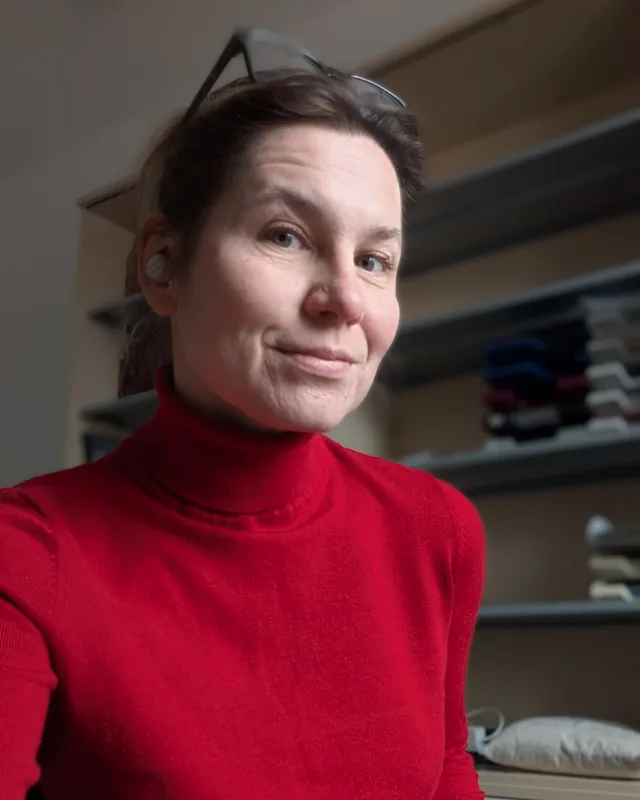
Who is behind it
Dr. Dinara Gagarina
Digital historian and digital humanist
I came to the humanities from mathematics and knowledge modelling, and I was studying artificial intelligence long before it became fashionable. More than twenty years ago I began teaching mathematics and computer methods to historians and other humanists. I soon noticed that most teaching materials offered humanists a simplified version of mathematics and digital methods. What I learned very quickly is that the opposite holds: using these methods well in the humanities is more complex and more subtle than in the natural sciences or even the social sciences.
Since then I have worked on how digital and mathematical methods can be adapted to humanities research. My doctoral thesis lies at the intersection of history, digital technologies and education. I then trained as a historian and built my career as a professional historian.
For many years I have designed study programmes of two kinds. Some are specialised digital humanities programmes at bachelor’s and master’s level, together with short formats such as summer schools and professional development courses. Others teach mathematics and digital methods to humanists with no digital background who simply want to become confident with computers, data and digital tools.
Today I teach digital methods to students from many fields: quantitative and mathematical methods, historical databases, data and knowledge modelling, GIS, text as data, visual digital humanities and computer vision, research infrastructures, and artificial intelligence in research. Much of what HumAI Atelier offers grows out of questions students and colleagues bring to these courses.
You can read more about my research and teaching on my academic website, dinaragagarina.com. I would be glad to collaborate.
HumAI Atelier is an independent personal project. It is not affiliated with, funded or endorsed by any employer or institution, and it does not represent their views.